REVIEW · ORLANDO
Skip the Line: Museum of Military History Ticket
Book on Viator →Operated by Museum of Military History · Bookable on Viator
Two hours, one line you can skip. At the Museum of Military History in Orlando, skip-the-line entry helps you start sooner, and the exhibits are set up to make military history feel human, not abstract.
I love that the ticket gets you mobile entry plus a structured museum visit designed for visitors of all ages. I also loved how tour guide Al adds context as you move through the displays, pointing out details that you would otherwise miss.
One drawback to consider: a few people reported trouble getting their tickets accepted at the entrance, so I’d keep your confirmation pulled up on your phone and be ready to show it right away. Also, plan a little buffer in case staff need a moment.
In This Review
- Quick hits
- Why skipping the line matters at this Orlando museum
- Mobile ticket entry: smooth when you’re ready
- Your 2-hour plan inside the Museum of Military History
- The timeline experience: America’s wars, organized to make sense
- What the guide (Al) adds that exhibits can’t
- Artifacts and accounts: where the visit gets real
- When this museum is the best fit (and when it might not be)
- Price and value: what you get for your time
- Should you book it?
- FAQ
- How long is the Museum of Military History skip-the-line ticket experience?
- Is the ticket mobile, and will I get confirmation after booking?
- What language is the experience offered in?
- What are the opening hours for the museum?
- Are service animals allowed?
- What is the cancellation policy?
Quick hits
- Skip-the-line entry gets you through faster so you can spend more time inside the exhibits.
- A guide-led walkthrough with room to wander means you can stay on track without feeling locked to a group.
- A chronological U.S. war timeline helps you make sense of how conflicts connect over time.
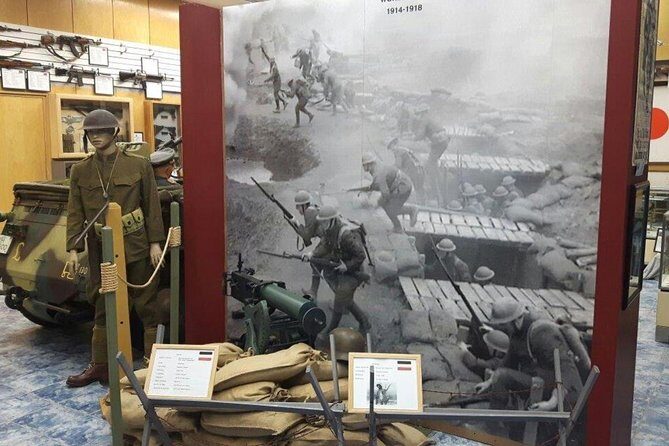
- Rare artifacts plus personal soldier accounts bring real weight to the stories behind the wars.
- Interactive, interpretive exhibits aim to work for both adults and families.
- English-language experience makes it straightforward to follow throughout.
Why skipping the line matters at this Orlando museum

Military history museums can feel like a test of patience if you hit peak hours. Here, the big practical win is skip-the-line entry, which helps you get inside on your schedule instead of waiting while your planned time evaporates.
This is a museum that’s open most of the week, Tuesday through Sunday from 10:00 AM to 6:00 PM. If you’re going in the middle of the day, that time slot can get busy. Faster entry means you’re not fighting the clock, and you can actually settle into the exhibits instead of rushing the first rooms.
Orlando is also one of those cities where your day can fill up fast. If you’re balancing parks, meals, and driving, saving even 30–45 minutes can make the difference between a calm visit and a stressed one. That’s the quiet value of this ticket.
You can also read our reviews of more tours and experiences in Orlando



Mobile ticket entry: smooth when you’re ready

The ticket you get is mobile, and your confirmation is provided at booking time. In real life, this matters because museums run on quick check-ins. If your phone battery is dying, your internet is spotty, or you’re scrambling to find the confirmation screen, you can lose time at the door.
My advice is simple:
- Keep the ticket ready on your phone before you arrive.
- If you can, take a screenshot so you’re not depending on a connection.
- Arrive with a bit of buffer, since a small number of people reported entry hiccups.
Also note: the experience is listed as being in English, so you’ll get the narration and exhibit guidance in that language. If you’re traveling with someone who needs another language, you’ll want to plan around that.
One more thing: the museum is near public transportation, which is handy if you don’t want to make this stop part of a heavy car-and-parking day. And service animals are allowed, which is good to know up front.
Your 2-hour plan inside the Museum of Military History

This visit runs about 2 hours, give or take, and it’s built around the idea that you can learn without feeling rushed. That pacing is a big deal in a museum like this. When you’re staring at uniforms, equipment, and timelines, you need a bit of time to read, look closer, and process what you’re seeing.
The museum’s mission is education through interactive, interpretive exhibits designed for visitors of all ages. Translation: you’re not just walking past objects behind glass. The exhibits are meant to guide you through meaning—what happened, why it mattered, and how Americans were affected.
In practice, that means your time inside will likely split into two modes:
- You follow the flow of the museum as the story builds.
- You pause when something pulls you in—an artifact, a timeline point, or a soldier’s account.
And that “no need to rush to follow a group” feeling? That’s where the self-paced part helps. You can keep moving while still spending real minutes on what matters most to you.
The timeline experience: America’s wars, organized to make sense
The museum uses a timeline approach, moving through American military involvement from earlier conflicts into later wars. One of the best things about this structure is that it gives you a map for your brain. Instead of random displays, you get a sense of sequence and consequence.
From what you’ll see, the exhibits start with early chapters and move forward, with plenty to catch your attention along the way. For example, one of the descriptions highlights that there’s something to see from the Revolutionary War forward, which tells you the scope is broad.
Here’s what that timeline format does for you as a visitor:
- It helps you connect themes across wars (technology, strategy, leadership, and human cost).
- It turns the museum into a learning path rather than a set of rooms.
- It makes it easier to revisit your favorite sections, because you know where you are in the story.
There’s also an emotional layer. The museum doesn’t just present battle dates. You’re also looking at moving accounts and personal perspectives—things that read as raw and direct rather than cleaned up. If you’re sensitive to war stories, plan to go slowly in the sections that feel heavier.
What the guide (Al) adds that exhibits can’t

A lot of museums have audio guides. This one leans more into a guided experience, and that’s where it can feel worth it beyond the ticket alone.
A standout detail from the experience is the tour guide Al, who walked through the exhibits and gave details that the displays alone wouldn’t explain. That’s important, because museum labels can be informative but limited. A good guide fills in the gaps: what to notice, why a particular artifact matters, and how to read the story the museum is telling.
What I think you’ll enjoy most about a guide-led walkthrough is the way it changes your viewing habits. You start looking for patterns:
- What changes over time in equipment and uniforms?
- Which accounts are used to show cause-and-effect, not just events?
- How the timeline connects one conflict to the next?
And since you’re not required to speed-run the visit, you can go back to your favorite stops after the explanation sinks in. That mix—structured guidance plus breathing room—is a winning formula for a museum like this.
You can also read our reviews of more historical tours in Orlando






Artifacts and accounts: where the visit gets real
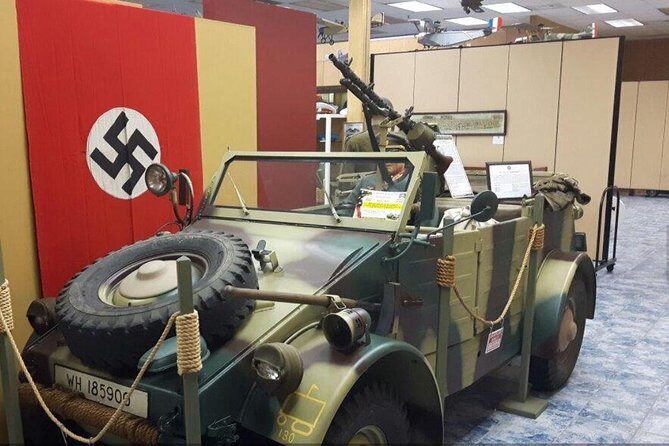
One of the highlights promised is a chance to see rare artifacts and read moving accounts by former soldiers. That combination tends to do something powerful: it shifts military history from a textbook topic into lived experience.
Artifacts pull you into the tangible side of history. You can look closely and think about what it took to use, carry, and maintain that equipment. Then personal accounts pull you into the human side—how people described fear, duty, survival, and loss.
In a visit like this, I recommend you give yourself at least one moment of stillness. Let the artifact sit in your mind while you read the surrounding context. That’s when the museum’s interpretive approach really clicks.
Also, because the exhibits are described as interactive and interpretive, you’re not just consuming information. You’re expected to participate with it—through how the displays guide your attention and how the narrative builds as you move through rooms.
When this museum is the best fit (and when it might not be)
This is a great pick if you want a serious, structured history visit without a huge time commitment. Since the experience is listed as 2 hours, it fits well into a day that already has other plans.
It’s also a strong choice if you’re the type of traveler who likes:
- chronological storytelling you can follow
- artifacts you can study
- personal accounts that make the topic feel real
The museum is designed for all ages, and the overall setup suggests families can enjoy it. That said, parts of military history can feel intense, especially where accounts are described as raw.
If you’re visiting with kids, I’d think about your pacing more than your route. Pick a few areas that seem most relevant and give yourselves enough time to read, not just scan. For adults, you’ll likely appreciate the timeline structure because it keeps the big picture from getting lost.
And for visitors who want a more flexible experience, the “explore at your own pace” style helps. You can stay with the storyline, then spend extra minutes where you’re curious.
Price and value: what you get for your time
There’s no specific dollar amount included in the details I have, so I can’t judge price in dollars. But I can judge value based on what this package includes.
You’re getting admission included, and you’re getting skip-the-line entry. In other words, you’re not paying just for a worksheet or a generic time slot. You’re paying for a museum visit that starts smoothly and is supported by a guided explanation.
The value comes down to time and context:
- If you hate waiting, skip-the-line matters.
- If you like understanding the why behind the objects, a guide-led walkthrough makes the exhibits more usable.
- If you want to read personal accounts and study artifacts, having about two hours keeps it from turning into a rushed blur.
That’s the sweet spot: you leave feeling like you learned something, not just that you walked past a lot of displays.
Should you book it?
Book this if you want an organized, emotionally grounded museum visit that fits in about two hours, starts quickly with skip-the-line entry, and includes guidance from Al that turns labels into meaning.
I’d think twice if you’re the type who absolutely can’t handle any uncertainty around ticket acceptance at the entrance. A small number of people reported issues getting tickets accepted, so you’ll want to go in prepared—with your mobile confirmation ready and your visit timed during open hours (10:00 AM to 6:00 PM, Tuesday–Sunday).
If your goal is a straightforward, respectful look at American military history with artifacts and accounts presented in a timeline, this is a smart use of your time in Orlando.
FAQ
How long is the Museum of Military History skip-the-line ticket experience?
It’s listed as approximately 2 hours.
Is the ticket mobile, and will I get confirmation after booking?
Yes. The experience includes a mobile ticket, and you’ll receive confirmation at the time of booking.
What language is the experience offered in?
The ticket is offered in English.
What are the opening hours for the museum?
The posted hours are Tuesday through Sunday, 10:00 AM to 6:00 PM.
Are service animals allowed?
Yes, service animals are allowed.
What is the cancellation policy?
You can cancel for a full refund if you cancel at least 24 hours in advance. If you cancel within 24 hours of the start time, the amount paid is not refunded.