REVIEW · ORLANDO
Gypsy Gold Horse Farm Walking Tour
Book on Viator →Operated by Gypsy Gold LLC · Bookable on Viator
One hour with Gypsy Vanner horses and donkeys. This walking tour at Gypsy Gold Horse Farm turns animal time into a mini lesson on how a British caravan-breed became a U.S. treasure.
I especially like the hands-on interaction, with opportunities to pet horses and donkeys. I also like the way the guide (Taylor) keeps things friendly and clear, including farm details and horse facts you can actually remember.
One consideration: this is an outdoor-style experience, so good weather matters, and plans can shift if conditions are rough.
In This Review
- Quick highlights before you go
- A One-Hour Farm Walk Where the Animals Do the Teaching
- Gypsy Vanner Roots: Why Gypsy Gold Horse Farm Matters
- What You’ll See: 30+ Horses, Mares, Foals, Stallions, and Donkeys
- Stop 1: The Gypsy Gold Farm Walk (What Happens During the Hour)
- Tour Guide Taylor’s Style: Friendly, Personal, and Practical
- Petting Time and Animal Interaction: What to Know Before You Go
- Price and Value: Is $30 for a One-Hour Walk Fair?
- Timing in the Afternoon: What 1:30 pm Feels Like
- Who This Tour Is Best For (and Who Might Skip)
- Weather, Group Size, and the Pace You Can Expect
- Should You Book the Gypsy Gold Horse Farm Walking Tour?
- FAQ
- How long is the Gypsy Gold Horse Farm walking tour?
- What does the tour cost?
- Where is the meeting point?
- What time does the tour start?
- What language is the tour offered in?
- How many people are in the group?
- What animals will you see and interact with?
- Is a mobile ticket used?
- What if the weather is bad?
- Is free cancellation available?
Quick highlights before you go
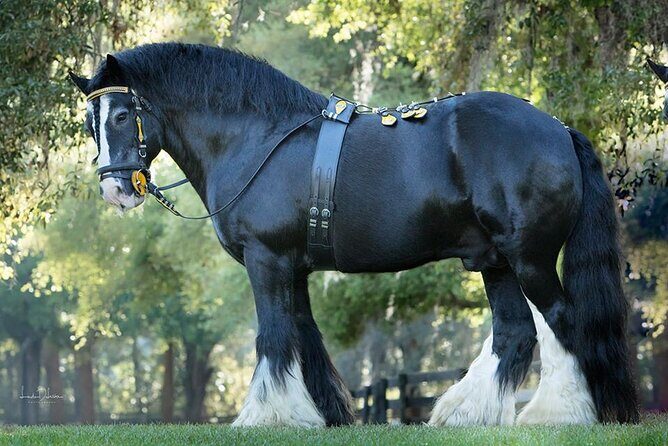
- Meet 30+ equines including mares, foals, and stallions at Gypsy Gold Horse Farm
- Learn the Gypsy Vanner backstory tied to Dennis Thompson and the breed’s U.S. registry
- Tour guide Taylor sets the tone with an easy-going, talk-with-you style
- Petting time is part of the point for horses and even the donkeys
- A small-group feel with a maximum of 40 people over about an hour
A One-Hour Farm Walk Where the Animals Do the Teaching
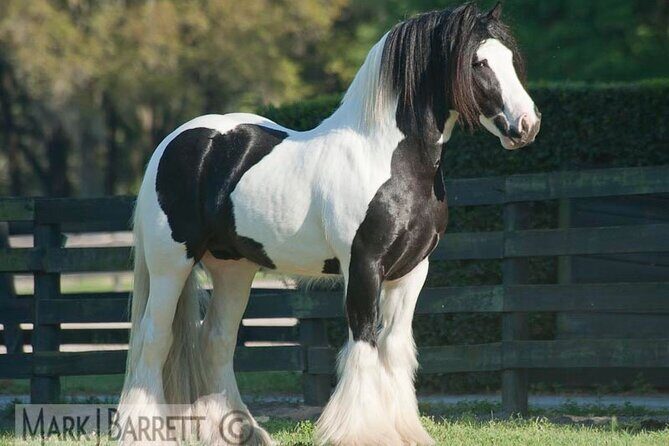
This isn’t a museum tour. It’s a walk through a real working farm where you get close enough to notice how horses and donkeys move, rest, and react to a group.
You’re there for the Gypsy Vanner story, but you’ll also walk away with practical, human-scale knowledge about the animals themselves. Expect a relaxed pace that still packs in a lot for a one-hour visit.
If you’re the type who likes to ask questions, this kind of tour rewards you. You’ll get answers in plain language, not farm jargon.
You can also read our reviews of more walking tours in Orlando

Gypsy Vanner Roots: Why Gypsy Gold Horse Farm Matters
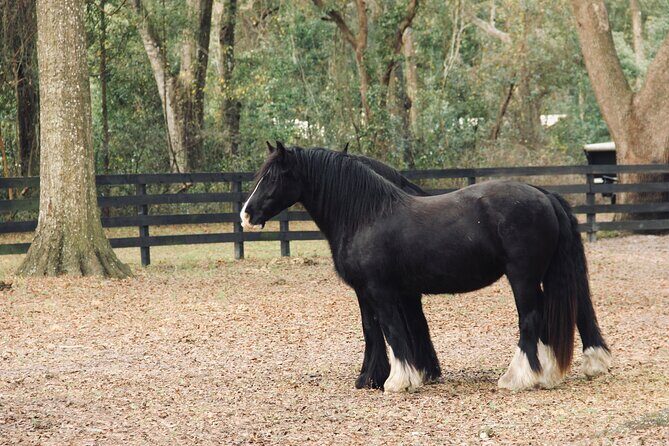
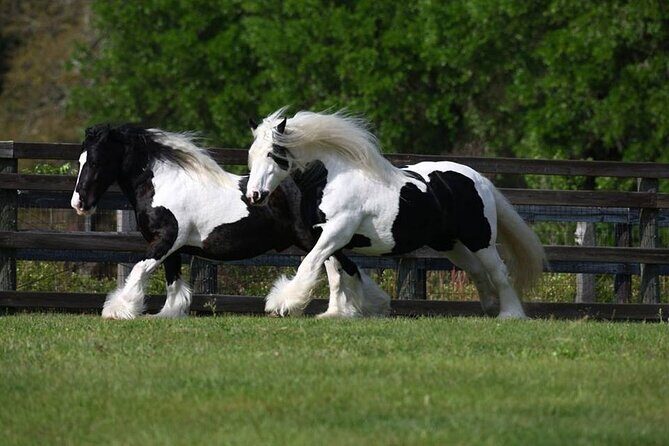
Gypsy Gold Horse Farm is the foundation farm for the Gypsy Vanner Horse, and that matters because it’s not just a place where horses live—it’s a place where the breed’s U.S. story was shaped.
Dennis Thompson brought the first 16 Gypsy Vanners into the United States and created the first registry for this breed. The breed originated with British Gypsies who used their horses to pull caravans, and that connection to work and mobility is part of what gives the Gypsy Vanner its identity.
On this tour, you don’t just hear dates and names. You get the context for how that caravan history turned into a registered breed in America, and why someone would go to the trouble of maintaining that lineage.
That context is what makes the experience feel more valuable than a simple animal viewing session.
What You’ll See: 30+ Horses, Mares, Foals, Stallions, and Donkeys
You’ll spend the tour at one main spot: the Gypsy Gold Farm. That focus keeps things simple, and it also means you can actually pay attention to the animals you see instead of racing between stops.
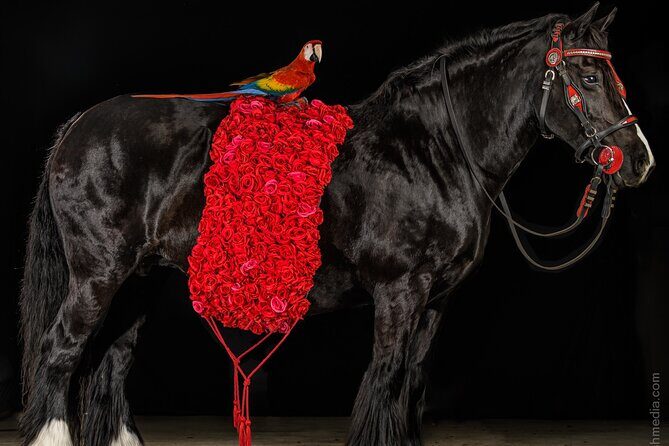
The farm houses 30+ equines, and the mix you’ll learn about includes mares, foals, and stallions. That’s a big deal because you can understand the breed across ages and roles, not just as one “type” of horse.
You should also plan on donkeys being part of the tour experience. More than one person highlights the donkeys as a favorite, and the setting makes them feel like characters rather than background animals.
One memorable farm moment mentioned in the feedback involves a donkey named Patience. The story goes that Patience once broke out of a pen and ended up accompanying the group around the farm, which became an unexpected highlight—proof that animals don’t treat tours like scripted performances.
Stop 1: The Gypsy Gold Farm Walk (What Happens During the Hour)
The experience runs about 1 hour, and it’s centered on Stop 1, The Gypsy Gold Farm. You’ll meet at 12501 SW 8th Ave, Ocala, FL 34473, then return to the same meeting point when the walk ends.
During that hour, the big themes are history + animal observation + interaction. You’ll hear about how the Gypsy Vanner breed developed and how Gypsy Gold became a foundation farm, and then you’ll meet the animals in that environment.
Here’s what you can expect the guide to do with the group: point out traits, explain what you’re looking at, and connect that back to the breed story. People also describe hearing explanations that go beyond basics, including topics like animal pregnancy and what it means on a working farm.
That kind of explanation is what turns a “look at horses” outing into something you’ll actually talk about afterward.
Tour Guide Taylor’s Style: Friendly, Personal, and Practical
A tour is only as good as the person steering the conversation. In this case, the guide Taylor is repeatedly mentioned for an easy-going personality and for keeping the information understandable.
I like when a guide can do two things at once: stay relaxed and still teach. That balance matters on a farm walk because you’re sharing space with animals that don’t follow human schedules.
The best part of Taylor’s style, based on what you’ll hear on the ground, is that the talk stays connected to what you’re seeing. If the guide notices an animal’s behavior or a farm detail, you get the explanation right there, not five minutes later when you’ve already moved on.
And when the group gets a moment to pet animals, the guide’s tone helps it feel respectful and calm instead of chaotic.
You can also read our reviews of more tours and experiences in Orlando
Petting Time and Animal Interaction: What to Know Before You Go
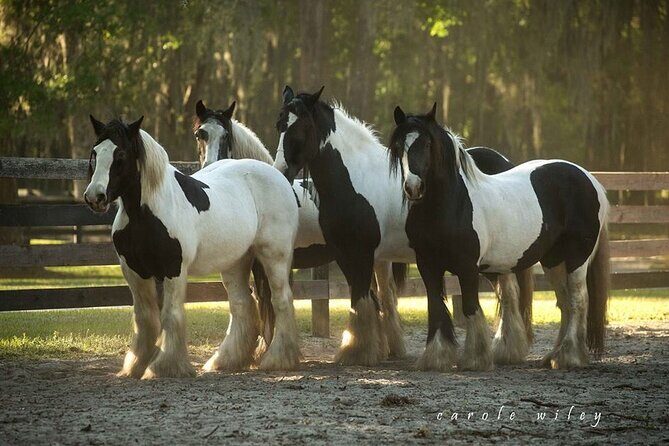
Petting is part of the experience, and people specifically mention being able to pet the horses and the donkeys. That’s one of the most appealing parts of this tour because it helps you learn through touch and observation, not just by watching.
Still, you should treat interaction as a farm activity, not a petting zoo free-for-all. You’ll be joining a walking group in an active animal setting, so you’ll want to follow the guide’s cues and keep your movements steady.
Also, notice how different animals feel and behave. Horses tend to be powerful and calm in short bursts, while donkeys can feel a little more curious and unpredictable. That contrast is exactly what makes the tour more fun for people who like variety.
If you’re visiting with kids, this is often the kind of tour that lands well because it mixes learning with direct animal contact.
Price and Value: Is $30 for a One-Hour Walk Fair?
At $30 per person for about an hour, this is priced like an accessible add-on activity rather than a big-ticket attraction. The value is in how focused the time is: one farm, one route, and plenty of animal contact within that hour.
What makes it feel worth the price is the combination of three things you don’t always get together:
- a structured talk about the breed’s roots and the foundation-farm story
- time spent with multiple types of horses (mares, foals, stallions)
- real interaction, including petting
If you’re paying for an hour in Florida, you’ll quickly notice that many options either cost more or give less meaningful connection to animals. Here, the fee buys you both education and hands-on time in a single stop.
And because the group cap is 40 travelers, the experience is more likely to feel personal than crowded.
Timing in the Afternoon: What 1:30 pm Feels Like
The start time is 1:30 pm, and the walk ends back where you began. That timing can be convenient if you’ve been driving around or sightseeing earlier in the day and want a calmer, lower-stress activity afterward.
An afternoon farm tour also tends to feel more relaxed than a rushed morning itinerary. You’re not racing daylight to fit everything in.
Just remember that this experience depends on good weather. Since it’s outdoors, plan to wear clothing you’ll be comfortable walking in and be ready for Florida shifts in sun, breeze, or clouds.
Who This Tour Is Best For (and Who Might Skip)
This tour fits best if you like animals, enjoy learning through observation, and want a more personal experience than a quick roadside stop.
It’s also a strong choice if you’re curious about the Gypsy Vanner breed and want more than a vague description. The story about Dennis Thompson bringing the first 16 horses and starting the registry gives you context you can carry with you, not just a name you forget later.
You might think twice if you’re expecting a long, multi-stop itinerary or a large “theme park” style event. This is one farm walk, and the reward is quality of time with the animals, not variety of locations.
If you want a calm group outing that’s still lively and hands-on, this is the kind of activity that matches that mood.
Weather, Group Size, and the Pace You Can Expect
The experience requires good weather, and if it’s canceled due to poor conditions, you’ll be offered a different date or a full refund. That’s important because farm walks work best when paths are safe and visibility is good for both people and animals.
Group size also shapes the feel. With a maximum of 40 people, you’ll generally get a manageable walking group instead of a huge crowd that overwhelms the space.
The pace is about an hour, so you won’t feel dragged through a long explanation. You’ll get guided stops and hands-on moments that fit within a tight time window.
Should You Book the Gypsy Gold Horse Farm Walking Tour?
If you’re a horse person, a donkey person, or simply someone who loves learning by being near animals, I think this tour is an easy yes. The $30 price makes it an affordable way to get a real farm experience, and the breed-history angle adds meaning without turning it into a lecture.
I’d book it especially if you want a focused, one-stop visit: see multiple categories of horses at a foundation farm, hear the origin story tied to Dennis Thompson, and get time to pet the animals. If you like your travel days full of small, authentic moments instead of big-city crowds, this one fits that style well.
FAQ
How long is the Gypsy Gold Horse Farm walking tour?
It runs about 1 hour.
What does the tour cost?
The price is $30.00 per person.
Where is the meeting point?
The meeting point is 12501 SW 8th Ave, Ocala, FL 34473, USA.
What time does the tour start?
Start time is 1:30 pm.
What language is the tour offered in?
The tour is offered in English.
How many people are in the group?
The maximum group size is 40 travelers.
What animals will you see and interact with?
You’ll learn about the Gypsy Vanner Horse and get to interact with 30+ equines, including mares, foals, and stallions, and also donkeys.
Is a mobile ticket used?
Yes, it’s a mobile ticket.
What if the weather is bad?
The experience requires good weather. If it’s canceled due to poor weather, you’ll be offered a different date or a full refund.
Is free cancellation available?
Yes. You can cancel up to 24 hours in advance for a full refund.