REVIEW · ORLANDO
SEA LIFE Orlando Aquarium Admission Ticket at ICON Park
Book on Viator →Operated by Merlin Entertainments Orlando · Bookable on Viator
Sea life has a way of making time slow down. At SEA LIFE Orlando Aquarium in ICON Park, you get a compact circuit of exhibits that’s built for all ages, with big-tank moments like a 360-degree glass tunnel.
I especially like how the aquarium is themed like Florida’s coasts and wetlands, so your visit feels like a real journey instead of just a line of tanks. I also like the hands-on teaching vibe, with shark and ray feedings and other short demonstrations during the day.
One possible drawback: it’s a smaller aquarium than some big-name ones, so if you want lots of adult-scale “wow” space or long lingering time, you may finish faster than you expect.
In This Review
- Key highlights worth planning around
- SEA LIFE Orlando at ICON Park: what kind of aquarium day you get
- Ticket value and timing: prebooking vs. showing up
- The exhibit route: wetlands to the Gulf coast in one circuit
- The headline animals: octopus, seahorses, sharks, and jellyfish
- Giant Pacific octopus
- Seahorses feeding and baby seahorse stories
- Jellyfish in an ocean-tide style tank
- Blacktip reef sharks and the tunnel view
- The 360-degree glass tunnel: where the visit really clicks
- Feedings, demonstrations, and the conservation story
- Photo stops and digital photos: how to avoid surprises
- Upgrading at ICON Park: Madame Tussauds and The Orlando Eye add-on days
- Where to park and how to find the entrance without stress
- Who this fits best: families, couples, and first-time aquarium fans
- Should you book SEA LIFE Orlando Aquarium Admission?
- FAQ
- How long does SEA LIFE Orlando Aquarium Admission take?
- Is the aquarium visit self-paced?
- Do I need a printed ticket?
- Can I upgrade the ticket to include other ICON Park attractions?
- Are VR pods included?
- Are service animals allowed?
- What is the cancellation policy?
Key highlights worth planning around
- Self-paced visit that fits your schedule, from quick stops to a longer family wander
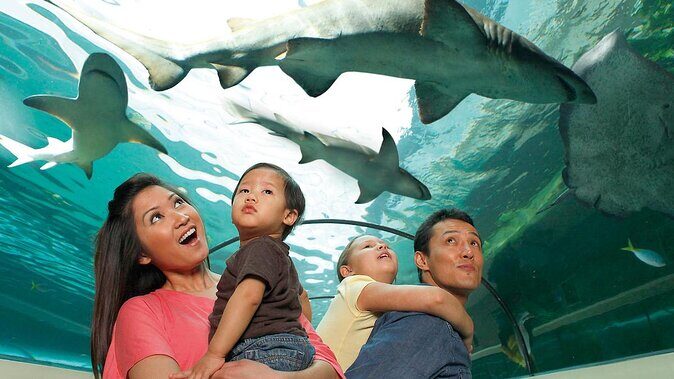
- The glass tunnel for a near-constant view of stingrays and sharks swimming overhead and around you
- Big animal moments like the giant Pacific octopus and seahorses feeding
- Jellyfish in a cylindrical tank that’s designed to mimic ocean tides and currents
- Shark and ray feedings plus demos that add timing-based fun to the walking part of your day
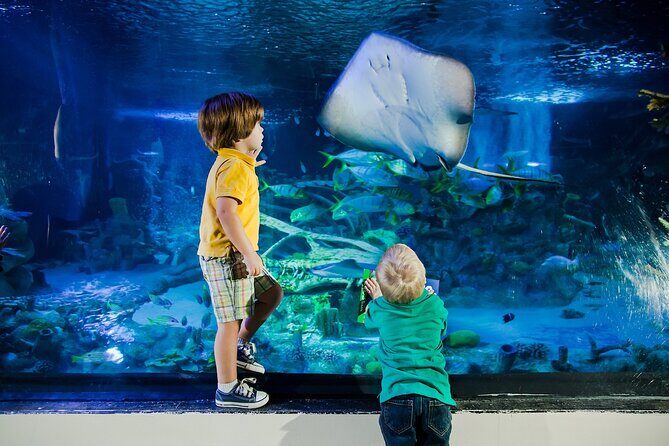
- Good for families, with kid-focused signage and lots of staff posted to explain what you’re seeing
SEA LIFE Orlando at ICON Park: what kind of aquarium day you get
This is an aquarium you can do without a tight plan. You pick a time during opening hours, show up, and then explore at your pace. Think of it as an hour-and-change for many people, with time to stretch it out if you read signs, watch feedings, or move slower with kids.
The location matters. SEA LIFE Orlando sits inside ICON Park on International Drive, which means you’re already in a cluster of things to do. So if your group has mixed interests, you can make this the anchor activity and keep the rest of the day flexible.
The vibe is family-first, but not in a boring way. You’re walking through themed habitats tied to subtropical Florida settings. That storytelling approach helps your brain connect the dots: swamp and wetland first, then the Gulf and coastal feel later. The result is a visit that stays coherent from start to finish.
You can also read our reviews of more tours and experiences in Orlando


Ticket value and timing: prebooking vs. showing up
The ticket price is $31.94 per person. That may feel steep if you’re comparing it to small-town aquariums or free museum days, but it’s usually fair for an Orlando attraction that includes a full entry ticket and self-guided access to all exhibits.
Prebooking is the smartest play here. The main advantage is guaranteed entry at your chosen time window. That matters in Orlando, where lines can steal your afternoon. With a mobile ticket, you also avoid hunting for paper.
You’ll want to do one small thing that pays off: take screenshots of your barcodes on your phone. A smooth entry is mostly about not scrambling at the last second when you’re standing in a queue.
How long should you budget? The range listed is 30 minutes to 2 hours 30 minutes. In practice, your time will depend on how many “pause moments” you want—especially the tunnel and the big featured species. If your group includes toddlers, you’ll likely spend longer at the kid-friendly sections where kids can stare for a full loop.
The exhibit route: wetlands to the Gulf coast in one circuit
The aquarium’s layout is built like a themed trip. You move from wetland and swamp areas connected with Lake Apopka, then into habitats influenced by the Florida Keys, and finally toward the shores of the Gulf of Mexico.
Why this helps: your eyes don’t just jump between unrelated tanks. You follow a path that feels logical, and that makes the whole visit easier to track—especially for kids who get restless when everything feels random.
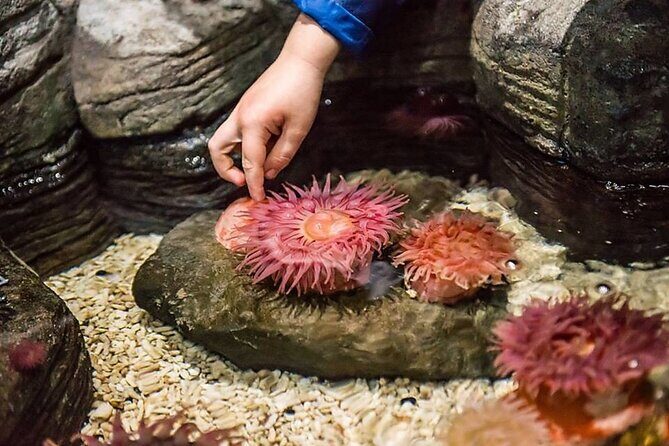
Along the way, you’ll see more than just fish. The exhibits cover sea urchins, crabs, and other shore-and-tide species. There are also tanks built around specific animal behaviors and habitats, which makes you notice details beyond color—like how some creatures stick to rock edges or how others use the water column.
If you like a clear storyline, this works well. If you dislike reading (or if your group has short attention spans), you can still get a fun outing because the big tanks provide plenty to look at even when you skim the labels.
The headline animals: octopus, seahorses, sharks, and jellyfish
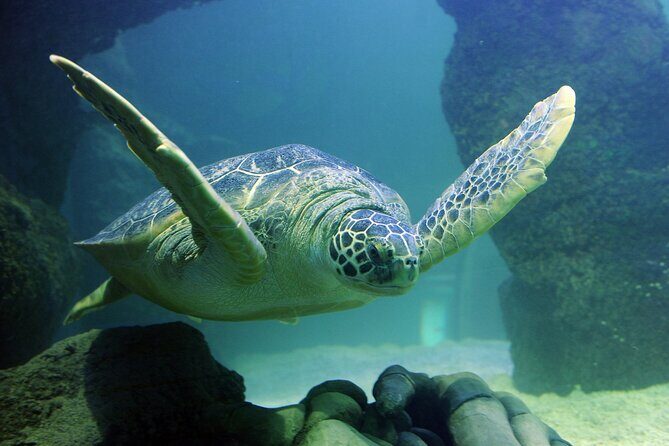
The aquarium is at its best when it slows you down with a signature animal moment. Here are the big ones to look for.
Giant Pacific octopus
You’ll have a chance to see a giant Pacific octopus, described as the largest octopus in the world, from cold Pacific Northwest waters. Even if you’ve never studied octopus behavior, it’s the kind of animal that draws an instant reaction—kids and adults alike.
You can also read our reviews of more tours and experiences in Orlando

Seahorses feeding and baby seahorse stories
Seahorses are another featured highlight. You can watch seahorses feed on small shrimp, and there’s also a focus on the male seahorse with babies in its pouch. This is a good example of why the aquarium feels more educational than purely decorative—there’s real biology behind the viewing.
Jellyfish in an ocean-tide style tank
Jellyfish are shown in a cylindrical tank designed to mimic ocean tides and currents. The shape and motion help you watch longer than you might expect. It also gives the aquarium a calm, floating counterpoint to the more energetic shark-and-stingray areas.
Blacktip reef sharks and the tunnel view
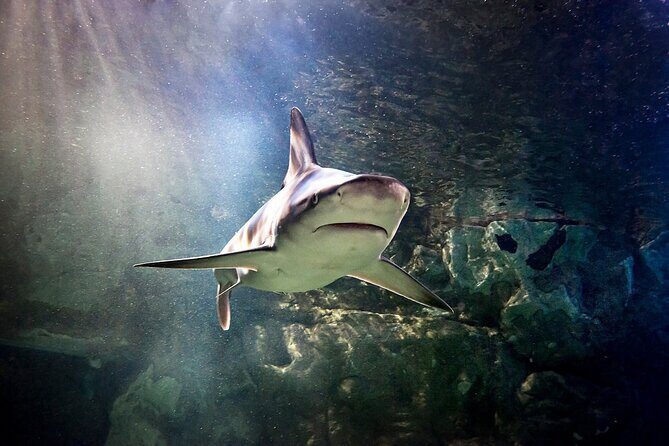
You can spot a tank of blacktip reef sharks. These are active swimmers, and you’ll get a better sense of their movement later with the tunnel experience.
The 360-degree glass tunnel: where the visit really clicks
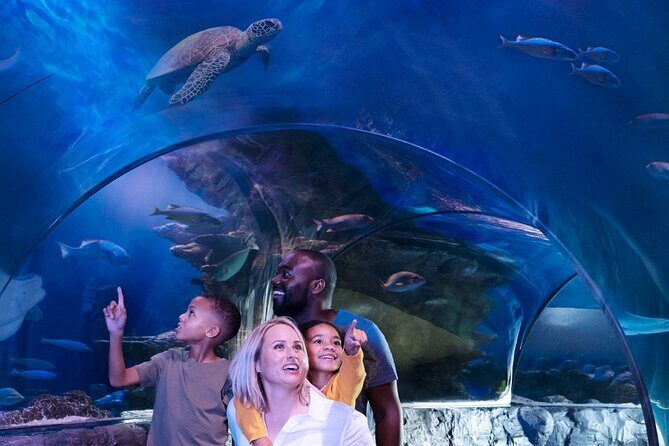
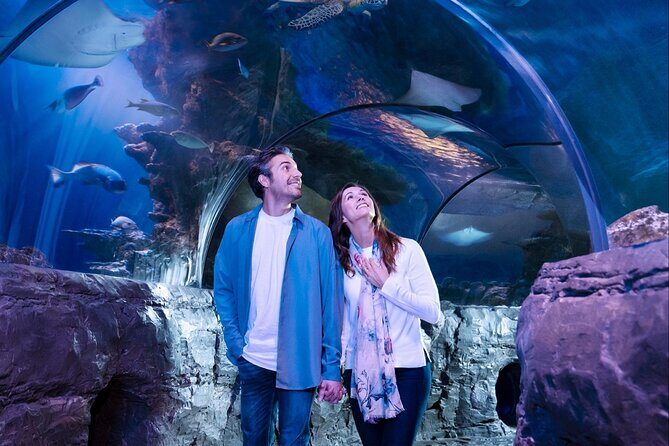
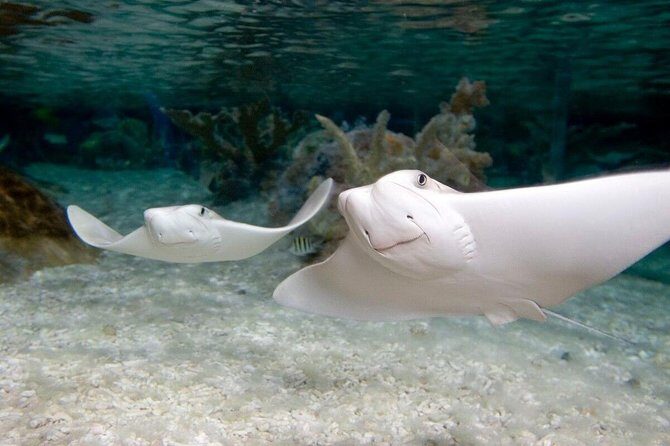
If you’re only going to plan for one thing, plan for the glass tunnel. It gives you a 360-degree view of stingrays and sharks moving around you, so you’re not just looking at them—you’re watching them pass through your space.
This tends to be the “everyone gathers here” section. Kids love it because they can track movement overhead and to the sides. Adults like it because the viewing angle helps you understand how these animals use the water column.
Practical tip: the tunnel can draw a crowd simply because it’s the best photo moment. If you care about clear sightlines, go through it when you’re not surrounded, even if it means adjusting your route slightly.
Feedings, demonstrations, and the conservation story
One reason SEA LIFE feels worth your time is that it isn’t only passive viewing. During your visit, hosted ray and shark feedings and other demonstrations are part of the day’s rhythm.
I like this approach because it turns the exhibit into a “show” without forcing you into a rigid schedule. Even if you miss one talk, you’ll still have multiple ways to learn, including staff explanations in different areas of the aquarium.
The conservation and breeding messaging is also included. You’ll see information about SEA LIFE’s support for worldwide conservation projects and breeding programs. There’s specific mention of breeding programs for sharks and endangered creatures like seahorses. For families, that’s a simple way to connect animal facts to real-world conservation.
Photo stops and digital photos: how to avoid surprises
SEA LIFE uses a photo workflow with Magic Memories. With many ticket packages, digital photos can be included when you select that option, and physical prints are sold separately.
A big practical warning from real-world experience: pay attention at the start of the process, and don’t assume you’ve already decided the cost. If someone takes your photo, you’ll want clarity on whether you’re opting into an included package or whether it’s optional upsell.
If you’re photo-sensitive and your kids are fast-moving, you can still enjoy the aquarium and skip the picture. But if you do want it, confirm what you’re getting before you leave your group with a decision.
Upgrading at ICON Park: Madame Tussauds and The Orlando Eye add-on days
Your basic SEA LIFE admission is the core. The ticket can also be upgraded to a 2- or 3-attraction pass, which lets you visit more than just the aquarium.
Two common add-ons:
- Madame Tussauds Orlando: lifelike wax figures, photo opportunities, and even a hands-on option to craft a wax hand mold (as described).
- The Orlando Eye: a 400-foot observation wheel with panoramic views. Capsules are air-conditioned, and it’s best for photo timing at sunset or night.
How to think about this for value: adding attractions makes sense if you were already planning a second stop at ICON Park. The location clustering helps because you won’t waste time commuting across town. If your group mainly wants aquariums and marine animals, you can keep it simple and just do SEA LIFE, then wander nearby.
There’s also an option for VR pods (if selected). One review note included a caution that VR can be hard for someone prone to motion sickness. If that’s you or someone in your group, treat VR as optional, not mandatory.
Where to park and how to find the entrance without stress
ICON Park is a big multi-tenant area, so parking can feel confusing if you arrive with just one mental image in mind. A helpful detail is that the parking garage by the ICON Park complex is available, with free parking on levels 4–7. There’s also a smaller ground lot behind Madame Tussauds.
Why this matters: you don’t want to waste energy hunting for the correct spot when you’re arriving with kids or after a drive. Once you’re parked, follow the flow of signage toward the ICON Park complex and then into SEA LIFE.
If you prefer a low-stress move, arrive a bit early so you can find your bearing and still enter in good shape.
Who this fits best: families, couples, and first-time aquarium fans
SEA LIFE Orlando works especially well for families. It’s described as a great learning attraction for kids, and the exhibit design supports shorter attention spans with lots of viewing moments and staff explanations.
Couples can enjoy it too, but you’ll get the most out of it if you like “watching animals close up” more than you need huge scale. Some people find aquariums like this small compared to larger ones, and that’s worth keeping in mind. If you’re used to giant regional aquariums, this may feel tighter.
Solo visitors also do fine because it’s self-paced. You can linger in the tunnel area, then come back later for another look if the crowd changes.
One extra consideration: some signage and identification labels are aimed at kids. If you’re taller and rely on labels for reading, you might find it easier to focus on the animals first and use staff help when you want extra info.
Should you book SEA LIFE Orlando Aquarium Admission?
Book it if you want an easy, family-friendly aquarium visit in a convenient Orlando location. The self-paced entry, the 360-degree tunnel, and the chance to catch shark and ray feedings make this a solid choice when you want a clear plan with room to wander.
Skip the upgrade and keep it only SEA LIFE if your group’s attention stays on the marine life. Consider adding Madame Tussauds or The Orlando Eye only if you’re already looking for a second attraction, because the real value is using ICON Park as your one-stop hub.
Don’t overthink it, but do a couple smart checks: confirm your date on your ticket, screenshot your barcode for entry, and be alert about photo package decisions at the start. If you do those things, you’ll likely get the kind of relaxed, educational day that feels like the best part of an Orlando itinerary.
FAQ
How long does SEA LIFE Orlando Aquarium Admission take?
The experience length is listed as about 30 minutes to 2 hours 30 minutes, depending on how much you read, watch feedings, and move through exhibits at your own pace.
Is the aquarium visit self-paced?
Yes. You enter at your chosen time during opening hours and explore the exhibits at your own pace.
Do I need a printed ticket?
No. The ticket is mobile, and you’ll want to keep your barcode handy for faster entry (screenshots are recommended).
Can I upgrade the ticket to include other ICON Park attractions?
Yes. When booking, you can choose a 2- or 3-attraction pass that adds access to Madame Tussauds Orlando and/or The Orlando Eye.
Are VR pods included?
VR pods are included if you select an option that includes them during booking.
Are service animals allowed?
Yes. Service animals are allowed.
What is the cancellation policy?
Cancellation is free up to 24 hours in advance for a full refund. If you cancel less than 24 hours before the start time, the amount paid isn’t refunded.