REVIEW · ORLANDO
Orlando: Bioluminescence Kayak Tour
Book on GetYourGuide →Operated by Adventures in Florida LLC · Bookable on GetYourGuide
Glow happens here, and it starts the moment you move. I love how the bioluminescence turns your kayak paddle into a trail of light, and I also love the feeling of paddling in warm, shallow brackish water where fish, manatees, and even dolphins can show up under your route. One thing to weigh: the brightness can be less spectacular than photos if conditions aren’t perfect, and I’d also plan for the chance you won’t see dolphins every night.
What makes this tour click is the human touch. Guides like Bill & Gina (and also Ben) are clearly invested in the science and the wildlife, and they help keep the group moving together so you get those best moments of swimming light. If you’re hoping for a clear-hull view, note that one person felt the kayak wasn’t as transparent as expected, so it’s worth mentally filing this under glowing water first, showroom kayak second.
In This Review
- Key moments that make the night paddle worth it
- Banana River at night: your 1.5-hour window of magic
- Where it happens: brackish water and the glow season
- What bioluminescence actually is (and why it looks better when you move)
- Why photos can disappoint (and what you can do)
- Meeting, check-in, and getting ready without wasting daylight
- Bringing the right stuff (or the night gets annoying fast)
- The ride on the water: paddling for glow, fish, and the big surprises
- Wildlife odds: what you might see
- Guides in action: Bill, Gina, and Ben bring more than safety
- Price and value: what $86 buys you in the real world
- How to decide if this is for you (and when to skip it)
- Should you book the Orlando bioluminescence kayak tour?
- FAQ
- How long is the bioluminescence kayak tour?
- When does this tour usually run?
- Where does the bioluminescence happen?
- What causes the living lights?
- What animals might I see during the tour?
- What do I wear or bring?
- What gear is included?
- Is there a ticket line to wait in?
- Are pets allowed?
- Are alcohol or smoking permitted?
Key moments that make the night paddle worth it
- Dinoflagellates flash instantly when water movement disturbs them, creating bluish-white trails
- Paddling in warm shallow areas gives you more chances for glowing fish and dramatic splashes
- Kayak-mounted lights help you handle gear and see your surroundings without killing the magic
- Wildlife sightings are real possibilities: manatees, dolphins, and glowing fish
- Photo help is part of the vibe since guides will take snaps for you when you ask
- It can turn into a bonus night sky show if lightning rolls through safely in the distance
Banana River at night: your 1.5-hour window of magic
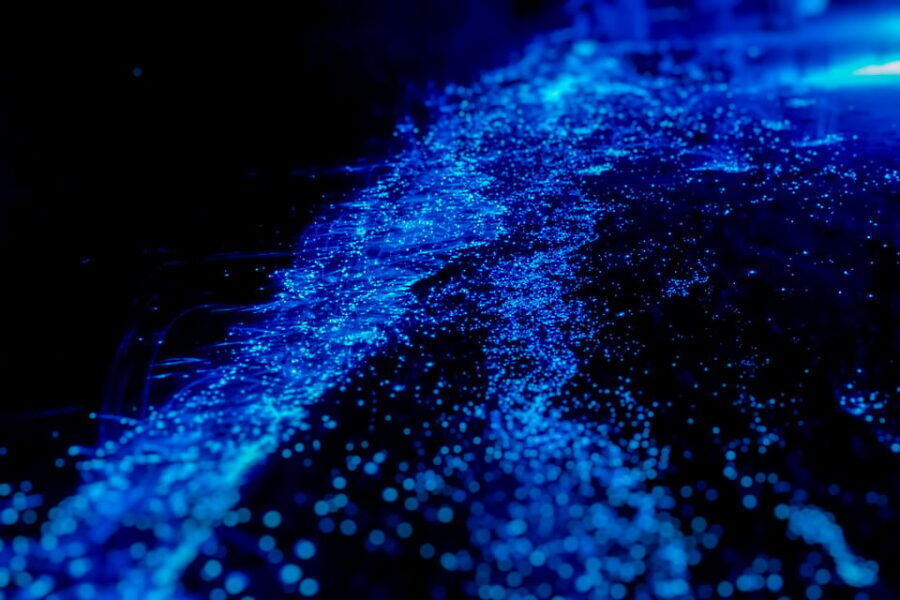
This tour is short by design. You’ll be out for about 1.5 hours, usually in the evening and at night, when darkness makes the glow pop. The goal isn’t a long expedition with big mileage. It’s more like a guided “hunt” through brackish water where movement wakes up the living lights.
You arrive, get set up, and you’re on the water with a group. The pace stays relaxed enough that you can look around without constantly worrying about direction. And because wildlife sightings aren’t guaranteed, keeping the trip tight also helps: if the conditions are right and the glow is really strong, time can feel like it disappears.
You can also read our reviews of more tours and experiences in Orlando
Where it happens: brackish water and the glow season
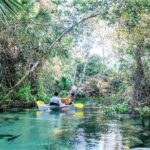
This is tied to summer months. The bioluminescence blooms in the brackish waters of the Banana River area. The water involved is often described in terms of warm Indian River conditions, and that warmth matters because it supports the dinoflagellates that create the glow.
In plain terms: this isn’t a year-round “any night will be epic” situation. If you can line it up with summer, you’re stacking the odds more in your favor.
What bioluminescence actually is (and why it looks better when you move)
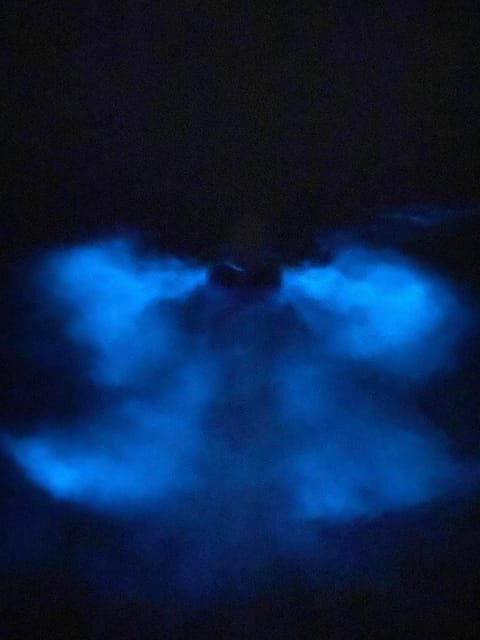
The glowing isn’t from some floating fairy dust. It comes from dinoflagellates, single-celled organisms common in marine environments. Each dinoflagellate only flashes for a fraction of a second when disturbed by movement, like a paddle entering the water or fish swimming close by.
The “wow” comes from two things:
- The organisms are present in high enough concentration to light up the water.
- Water movement keeps triggering quick flashes, which your eyes read as trails.
So when you paddle and your kayak paddle disturbs the water, you’ll see a streaking effect. When fish swim and churn the surface, the water can light up in a way that feels like it’s responding to you. And on good nights, a manatee may appear as a moving cloud of living light, with the animal sometimes hard to spot until the glowing water gives away where it is.
Why photos can disappoint (and what you can do)
If your mental picture is based on a perfect viral photo, adjust expectations a notch. Bioluminescence intensity depends on conditions, and a couple of people felt it wasn’t as spectacular as the pictures on their night.
Your best move is to treat this as a motion-triggered experience, not a static light show. Paddle gently but keep moving. Watch the water where your paddle just went. Look for flickers near your kayak instead of scanning only far ahead. When the glow is active, it tends to be most dramatic around the areas you’re actively disturbing.
Meeting, check-in, and getting ready without wasting daylight
The check-in part is pretty standard, but there are a few details that matter.
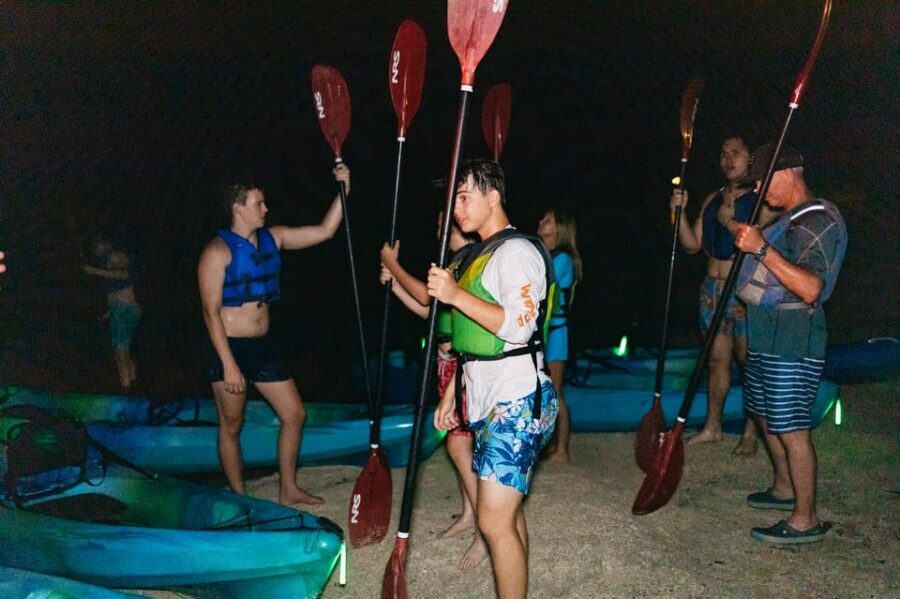
When you arrive at the park, you check in with the trip leaders. You’ll sign a mandatory release of liability and assumption of risk form before you gear up. Then you’re outfitted with a life jacket, kayak, and paddle, plus you get kayak lights for the experience.
The tour uses a “group paddle” method. After brief instruction, you’ll paddle together as the guides look for the living lights. That group structure matters because calm, coordinated movement usually leads to better opportunities for glowing trails and wildlife moments.

Bringing the right stuff (or the night gets annoying fast)
Bring what they explicitly ask for:
- Insect repellent
- Outdoor clothing
- Cash (it’s listed as something to bring)
Also, don’t plan to bring anything not allowed. Pets are not allowed, and smoking plus alcohol and drugs are not allowed.
Practical tip: wear the kind of clothing you can get damp. Even if you don’t splash much, the environment is water-adjacent and you’ll feel the humidity.
The ride on the water: paddling for glow, fish, and the big surprises
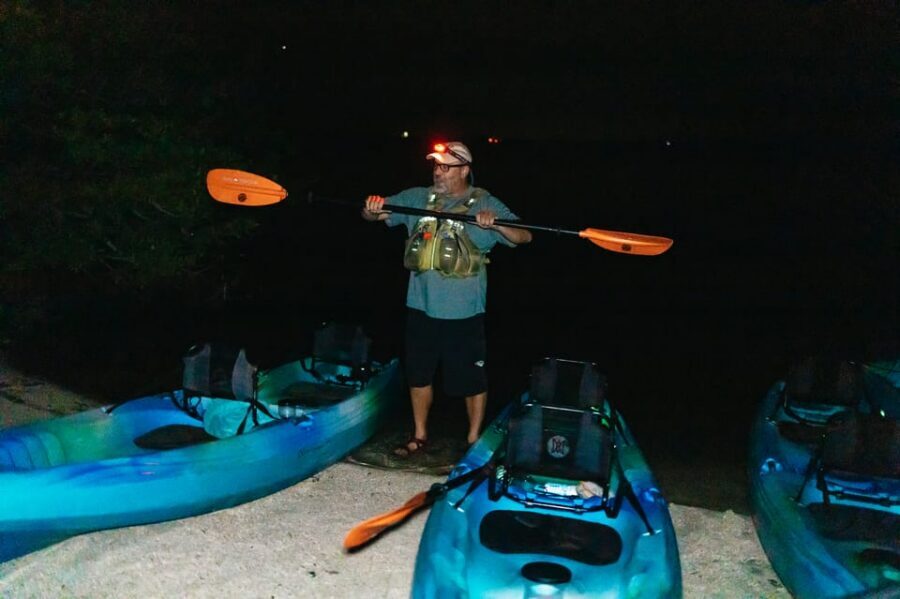
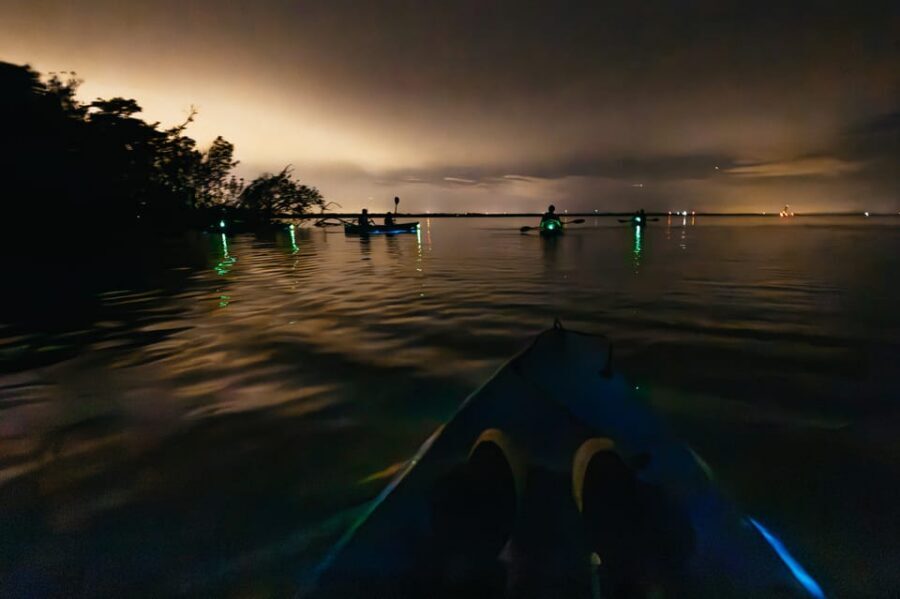
Once you’re out there, the tour becomes very sensory. You’ll see the water surface change as your paddle moves. The glow often looks like bluish-white streaks that show up where the kayak has disturbed the water.
The guides search as you paddle. Most of the magic comes from your kayak and the nearby movement in the water, so don’t ignore the close-up stuff. Glowing fish and small flashes near the surface can happen repeatedly rather than only as one grand finale.
Wildlife odds: what you might see
The big advertised headline is wildlife. The tour’s highlight list includes glowing dolphins, manatees, and fish.
From the experience notes you provided, manatees seem particularly realistic as a “best-case” highlight. One key detail is that a manatee can be completely concealed until it’s moving through the living light, turning the water into a glowing cloud.
Dolphins are also part of the promise, but you should treat them as a bonus. In fact, one person specifically wished they had seen dolphins on their night. That lines up with the reality of wildlife viewing: you can do everything right and still miss the animal you want most.
And if you want a reality check on the sky: one person mentioned a lightning show from a safe distance. That’s not something you can plan, but it tells you the night can have extra drama beyond the water.
Guides in action: Bill, Gina, and Ben bring more than safety
The most consistent praise is about the guides’ energy and support. People describe Bill & Gina as perfect hosts—enthusiastic about bioluminescence and knowledgeable about local wildlife and other things to do in the area. Ben also gets called out for making the trip fun, entertaining, and relaxing at the same time, with real help and comfort on the water.
You’ll feel that in small ways:
- Group instruction that keeps things calm
- Guidance on where to look and how to paddle
- The willingness to help with photos when you ask
If you like having someone point out what’s happening instead of guessing in the dark, this tour fits that style.
Price and value: what $86 buys you in the real world
At $86 per person for about 1.5 hours, you’re paying for more than “a kayak and a dark lake.” You’re buying:
- Guided instruction and management of the group paddle
- Kayak and paddle gear
- Kayak lights for the experience
- Bottled water
- The real setup and access to the right stretch of water at the right time of night
You also avoid the time sink of sorting logistics yourself. With bioluminescence tours, the difference between a good night and a forgettable one is often practical: the right water conditions, the right timing, and a guide who knows how to work the group through it.
A fair way to think about it: $86 is the price of a guided, controlled nighttime nature moment. If you’re traveling as a couple or with kids who will actually stay engaged for the whole 90 minutes, it can feel like a memorable bucket-list experience rather than an itemized activity.
How to decide if this is for you (and when to skip it)
This is a strong fit if you want:
- A short, easy-to-plan nighttime activity
- A nature experience where your actions (paddling) directly shape what you see
- Wildlife chances without needing scuba gear or serious outdoor skills
It’s also a good pick for families. One write-up notes bringing two boys ages 18 and 19, and they loved it. Another mentions the whole family enjoyed the experience, which lines up with the idea that the tour is accessible and not physically demanding.
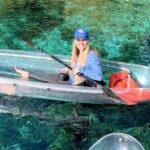
It might be a less perfect fit if you’re picky about the look of the kayak itself. If you’re expecting a particular visual setup—like an especially transparent hull—remember there’s at least one note that it wasn’t as transparent as expected. The glow can still be the star, but if the hull appearance is your main obsession, ask first or adjust expectations.
Should you book the Orlando bioluminescence kayak tour?
If you’re in Orlando in summer months, I’d book it. The reason is simple: the entire experience hinges on warm seasonal water and the dinoflagellates that flash when disturbed. When you get the right conditions, this is exactly the kind of night experience that feels different from anything else in the area.
I’d book even if you’re a bit skeptical of wildlife promises, because the paddling glow itself can still be the main event. Just don’t treat it like a guaranteed dolphin-and-lightning blockbuster every night.
Book it if you want a guided, 90-minute night adventure with strong guide support—especially the kinds of hosts like Bill & Gina and Ben who keep the experience fun while explaining what’s happening in the water.
FAQ
How long is the bioluminescence kayak tour?
The tour lasts about 1.5 hours.
When does this tour usually run?
It’s usually available in the evening and at night.
Where does the bioluminescence happen?
It happens in the brackish waters of the Banana River area, with the glow associated with warm Indian River water conditions.
What causes the living lights?
The glow comes from dinoflagellates, single-celled organisms that flash when disturbed by water movement.
What animals might I see during the tour?
The highlight includes glowing fish, manatees, and dolphins.
What do I wear or bring?
Bring insect repellent and outdoor clothing. Cash is also listed as something to bring.
What gear is included?
You’ll be provided a kayak or canoe (as available), all paddling gear, life jacket, and kayak lights, plus bottled water and instruction.
Is there a ticket line to wait in?
The experience notes that you can skip the ticket line.
Are pets allowed?
No, pets are not allowed.
Are alcohol or smoking permitted?
No. Alcohol and drugs are not allowed, and smoking is not allowed.
If you want, tell me your travel month and whether you’re going with kids or adults, and I’ll help you pick the best kind of night to target.