REVIEW · ORLANDO
Basic Drill: Introductory Indoor Tactical Experience Orlando
Book on Viator →Operated by Decision Tactical · Bookable on Viator
Tactical training should feel controlled, not chaotic. The Basic Drill in Sanford (near Orlando) mixes firearm safety coaching with hands-on, simulated drills that actually test decision-making under pressure. You’ll start with handgun handling fundamentals, then move into realistic scenario work where you plan your next move instead of just repeating a static skill.
Two parts I especially like are the step-by-step progression (coaching first, then scenarios) and the variety of tasks. You don’t just shoot at a board; you practice drawing from a holster, angled shooting, and engaging targets while moving, then you apply it in a hyper-realistic situation with cover and partner communication. It’s built for first-timers, including teens.
One consideration: it’s an intro course using realistic non-lethal equipment indoors, so it’s not the same thing as firing live rounds or getting long, advanced tactical instruction.
In This Review
- Key Highlights You’ll Care About
- The Orlando Basic Drill Experience: More Than a One-Off Thrill
- Where You Go in Sanford (and What “Small Group” Means)
- Safety Coaching and Handgun Handling: The Real Foundation
- The Simulated Range: Where You Learn by Doing
- Hyper-Realistic Scenarios: Threat ID, Cover, and Partner Talk
- Life-Saving Basics Between Scenarios: Tourniquet and Disarm Concepts
- The Competition Course: Speed and Accuracy With Obstacles
- Instructor Style That People Actually Talk About: Alex and Cowboy
- Price and Value: Is $69 Worth 1.5 Hours?
- Scheduling: How Far Ahead to Book
- Who Should Book This (and Who Might Prefer Something Else)
- Should You Book the Basic Drill?
- FAQ
- What is the duration of the Basic Drill?
- How much does it cost?
- Is there live fire or projectiles involved?
- Where does the experience start?
- How big is the group?
- What language is it offered in?
- What is the cancellation policy?
- Can I bring a service animal?
Key Highlights You’ll Care About
- Non-lethal simulation that still feels realistic, using simulated range equipment
- Clear safety-first handgun coaching before you touch any drills
- Holster, angles, and moving targets that go beyond a traditional range setup
- Hyper-realistic scenario training focused on threats, cover, and talking with a partner
- Life-saving basics taught between scenarios, including tourniquet use and disarm concepts
- Timed Competition Course that measures speed and accuracy through obstacles
The Orlando Basic Drill Experience: More Than a One-Off Thrill
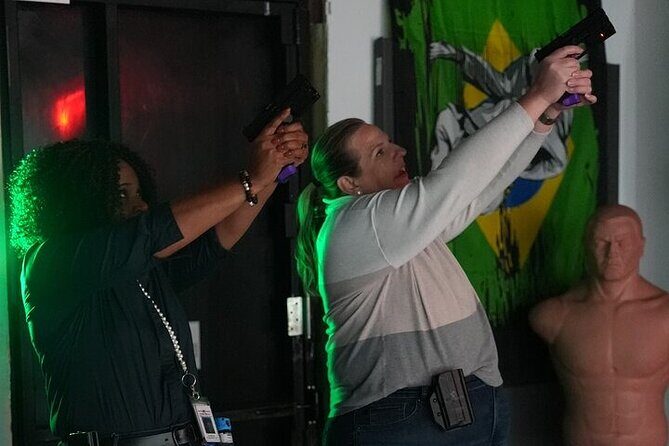
If you want something different from the usual Central Florida lineup, this is a smart pick. The Basic Drill is an indoor tactical experience designed to feel structured and safe, while still giving you that hands-on, “what would I do next?” pressure that typical shooting ranges don’t replicate.
The big idea here is progression. You begin with professional instruction on handgun handling and firearm safety. Then you test what you learned on a simulated range. After that, you level up into scenarios that force you to identify threats, use cover, and communicate with a partner while you’re under stress. It’s not just equipment practice. It’s situational practice.
And the course format is short enough to fit a vacation schedule. Plan on about 1 hour 30 minutes, and you’ll likely be done in time to keep the rest of your day for food, theme parks, or just a long walk.
You can also read our reviews of more tours and experiences in Orlando.


Where You Go in Sanford (and What “Small Group” Means)
This activity starts at Decision Tactical, 430 Towne Center Cir Suite A, Sanford, FL 32771 and ends back at the meeting point. It uses a mobile ticket, which makes arrival simpler when you’re juggling a busy travel day.
The group size is capped at 8 travelers. That matters more than it sounds. Smaller groups usually mean you spend less time waiting, and instructors can correct mistakes in real time. For a hands-on safety-based experience, that’s a real value.
Also, you’ll be in English, and confirmation is received at booking. The experience notes that most travelers can participate, which is helpful if you’re not sure how this fits your comfort level. If you’re bringing a service animal, service animals are allowed.
Safety Coaching and Handgun Handling: The Real Foundation
Most people think tactical training is all about speed and action. This one starts with the boring-but-critical part: handgun handling and firearm safety, taught by professional coaching. That’s not just “rules talk.” It sets the tone so the rest of the session doesn’t feel random.
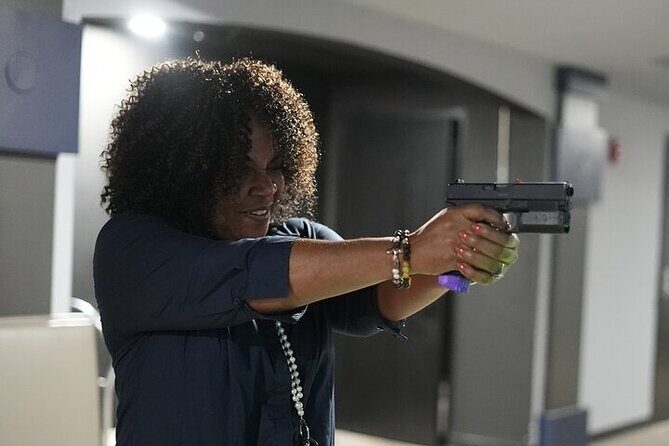
You’ll then move into simulated shooting drills using realistic, non-lethal equipment. The goal isn’t to scare you. The goal is to teach control while you learn how to move through tasks.
Here are the drill types that give this course its practical feel:
- Drawing from a holster (so you practice a controlled start, not just aiming from a fixed position)
- Angled shooting (so you learn to engage targets without only using one flat stance)
- Engaging targets on the move (so your decisions and posture matter, not just your trigger pull)
Even if you’ve never done anything like this, the structure makes it easier: learn the basic behavior first, then test it in a safe simulation environment.
The Simulated Range: Where You Learn by Doing
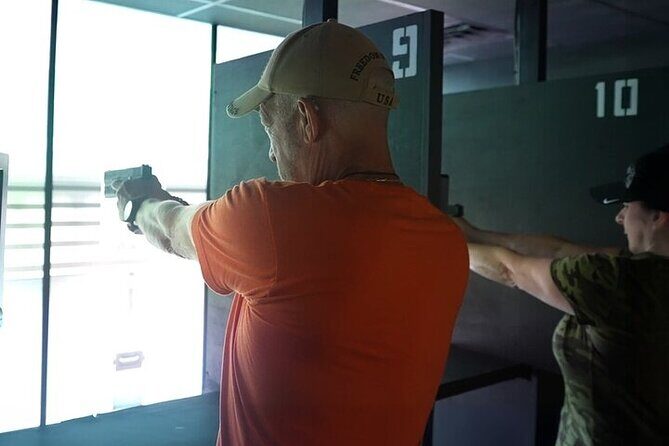
After instruction, you get to test your skills on the simulated range. This is where the experience starts feeling like a course instead of a talk. Because the equipment is non-lethal, you can focus on mechanics, positioning, and decision flow without the added pressure of live-fire rules.
I like that the range portion includes drills that traditional ranges often skip. Most casual shooting experiences focus on steady, forward-facing shooting. Here, you’re pushed to think about angles and movement, and you practice doing it in a planned, coached way.
One subtle benefit for vacation travelers: the training format stays consistent. In 90 minutes, you’re not bouncing between too many unrelated activities. You’re learning a skill set, applying it, then carrying it into scenario work.
Hyper-Realistic Scenarios: Threat ID, Cover, and Partner Talk
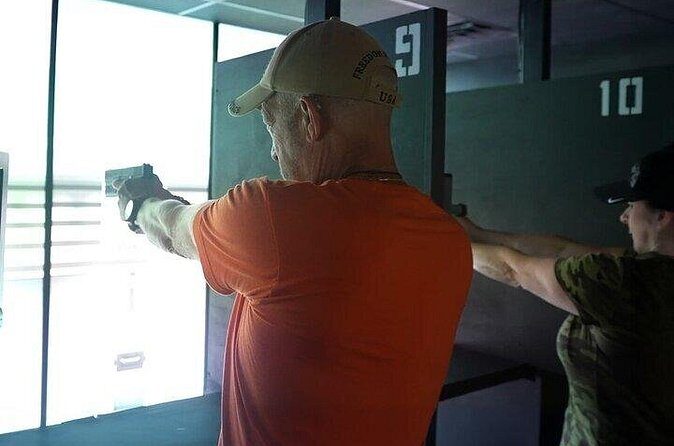
The scenario portion is where this experience earns its name as a tactical intro. You’ll run a hyper-realistic scenario designed to test decision-making. The course description is clear about what you practice here: identifying threats, using cover, and communicating effectively with your partner while under pressure.
That partner communication piece is the part many first-timers don’t expect. Tactical thinking isn’t only about aiming. It’s also about coordinating actions: calling out what you see, what you’re doing next, and how you’re moving relative to another person. If you’ve ever wondered what “situational awareness” actually looks like, this is the closest thing to a practical demo.
And yes, it can feel intense. But it’s intentionally built to be immersive without being reckless. You’re learning to manage pressure rather than just “survive” a chaotic set piece.




Life-Saving Basics Between Scenarios: Tourniquet and Disarm Concepts

Between scenario segments, the course introduces practical, life-saving skills. You’ll learn about disarming a threat and how to apply a tourniquet.
I’m glad they include this. Tactical training is often misunderstood as purely “fight stuff.” Even in an introductory format, bringing in first-aid style readiness makes the training more grounded. It shifts the focus from adrenaline to prevention and response, at least at a basic level.
Important note: the information provided says these are learned between scenarios, but it doesn’t promise an advanced medical course. So treat it as an intro to the concepts and fundamentals you can carry forward, not certification or full training.
The Competition Course: Speed and Accuracy With Obstacles

After the scenario work, you’ll take on the Competition Course. This is where the session becomes more game-like and measurable. The description calls out targets and obstacles, and the goal is speed and accuracy.
Timed tasks change how you perform. When you’re not just trying to be correct, you also want to be fast, you stop overthinking. You rely on the basics you were taught earlier and execute them under a “finish the course” mindset.
For many people, this is also the part that feels most like a true experience rather than a class. It’s structured competition inside a training environment, not just random practice.
Instructor Style That People Actually Talk About: Alex and Cowboy
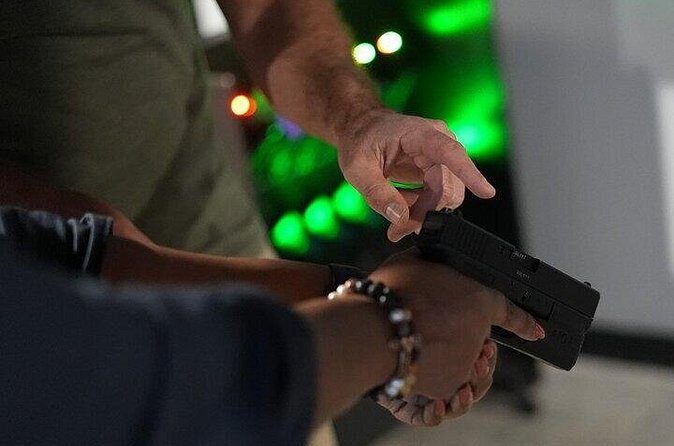
Two names show up in the most positive feedback: Alex and an instructor nicknamed Cowboy. That’s useful information because it hints at what makes the session work for first-timers.
Alex is praised for being clear with direction, including guidance from an assigned captain/guide. Clear direction matters in safety-based training because you don’t want to guess. You want to understand what to do, then do it the same way every time.
Cowboy is described as funny and friendly, and also highly effective at running the experience. That mix of humor and competence is often what keeps people calm during scenario pressure. If you’re worried about feeling awkward as a beginner, instructor tone can make a big difference.
The overall vibe from the feedback is that the scenarios give people an appreciation for what law enforcement goes through. You can read that as: the course tries to make the training feel real enough to teach respect, not just entertainment.
Price and Value: Is $69 Worth 1.5 Hours?
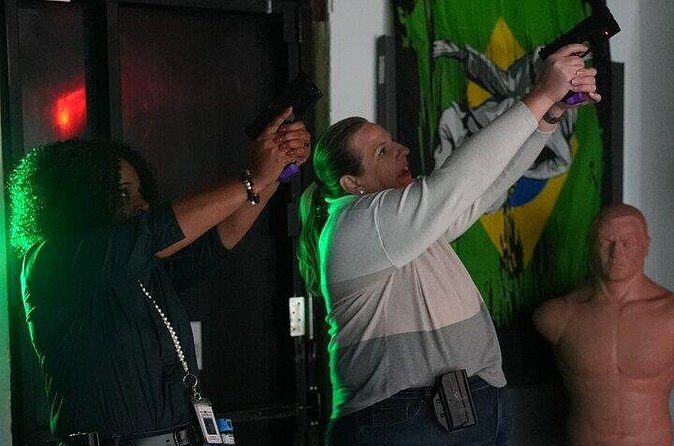
At $69 per person for about 1 hour 30 minutes, you’re paying for a coached, safety-based training session with multiple phases: instruction, simulated drills, scenario work, and a competition segment.
Here’s why I think the value holds up:
- You’re not paying for a “try it once” demo. You get a structured sequence with decision-making practice.
- You’re in a small group (max 8), which supports more hands-on coaching.
- The experience includes more than range time. Scenario training plus life-saving basics like tourniquet use increase the learning variety.
- The equipment is non-lethal but realistic, so you’re practicing mechanics and control.
If you’re hoping for an advanced course that goes deep into tactics for long stretches of time, this isn’t that. It’s a basic intro. But for a first taste of tactical-style training in a safe, indoor format, the price is reasonable.
Scheduling: How Far Ahead to Book
The booking pattern shows an average of 30 days in advance. That suggests these sessions can fill up, especially with a max group size of 8 and a limited selection of offerings.
If your trip dates are set, I’d book soon after you lock in your Orlando-area itinerary. One reason: you don’t want to build your schedule around a “maybe we can fit it in” plan for a short, time-specific experience.
Who Should Book This (and Who Might Prefer Something Else)
This fits best if you:
- Want a first-timer-friendly tactical intro without live fire
- Like hands-on instruction that starts with safety and builds to scenario decision-making
- Want a fun date night or group activity in the Orlando area that’s not another theme park line
- Are comfortable with simulated pressure and structured drills
It may not fit if you:
- Specifically want live ammunition or a real firing experience
- Are looking for a very long, advanced tactical program rather than an intro (this is designed as a limited selection of a broader offering)
- Prefer purely observational activities rather than physical, coached participation
Should You Book the Basic Drill?
If you want an indoor, safety-first tactical experience that teaches decision-making and not just aim, I’d book it. The combination of handgun handling coaching, non-lethal simulated drills, hyper-realistic scenarios, life-saving basics, and a timed competition course makes this feel like a complete “intro to tactical training” package in 90 minutes.
Book it especially if you’ll enjoy clear coaching and you’re curious about how scenario pressure changes choices. And if you’re the kind of traveler who likes structured, small-group activities you can actually learn from, this one has a strong fit.
If you’re still on the fence, go in expecting an intro experience. It’s designed to be accessible, practical, and safe, not a hardcore tactical boot camp.
FAQ
What is the duration of the Basic Drill?
The experience lasts about 1 hour 30 minutes.
How much does it cost?
The price is $69.00 per person.
Is there live fire or projectiles involved?
The course uses a simulated shooting range with realistic, non-lethal equipment, and it’s described as being without live fire.
Where does the experience start?
It starts at Decision Tactical, 430 Towne Center Cir Suite A, Sanford, FL 32771, USA, and ends back at the meeting point.
How big is the group?
The activity has a maximum of 8 travelers.
What language is it offered in?
It’s offered in English.
What is the cancellation policy?
You can cancel for a full refund up to 24 hours in advance of the experience’s start time.
Can I bring a service animal?
Service animals are allowed.